Recommendations
Books Like Hyperion
Best books to read after Hyperion by John Keats
Readers engaged by Keats's Miltonic epic fragments about the fall of the Titans will find companion works in the epics he was imitating and revising, in the philosophy of beauty and suffering he was exploring, and in the Odes that answered the questions Hyperion could not.
- 1
 Buy on Amazon
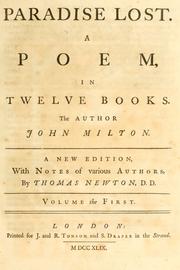
Paradise Lost
by John Milton
The epic that Hyperion is consciously imitating and eventually rejecting — Keats told his publisher he had given up Hyperion because there were 'too many Miltonic inversions'; reading Paradise Lost alongside Hyperion shows exactly what Keats borrowed (the cosmic scale, the debating fallen gods) and what he found he could not sustain.
- 2Buy on Amazon
The Odes of John Keats
by John Keats
The lyric alternative to the epic ambitions of Hyperion — when Keats abandoned the epic project, he turned to the Ode; the Odes take up the philosophical questions Hyperion poses (beauty vs. truth, suffering as the condition of knowledge) and find ways to live with them rather than resolve them; the essential companion.
- 3
 Buy on Amazon
Prometheus Unbound
by Percy Bysshe Shelley
The companion Romantic mythological epic — Shelley's four-act lyrical drama about the overthrow of Jupiter explores the same questions about the fall of old orders and the emergence of new ones that Hyperion dramatizes through the Titans; reading both shows the full range of Romantic engagement with Greek mythology.
- 4Buy on Amazon
Lamia and Other Poems
by John Keats
The 1820 collection that includes the published Hyperion fragment alongside the narrative poems and Odes — reading the complete 1820 volume as Keats arranged it shows how he framed Hyperion publicly as a fragment of a larger project that illness had cut short.
- 5Buy on Amazon
The Iliad
by Homer (trans. Robert Fagles)
The Greek epic that underlies Hyperion's cosmic world — the scenes of the fallen Titans in Hyperion draw on Homeric epic conventions (the divine councils, the catalogue of fallen gods) that Keats learned through Pope's translation and Chapman's Homer; reading the Iliad alongside Hyperion shows the classical ancestry of the poem.
- 6Buy on Amazon
Theogony
by Hesiod (trans. M.L. West)
The Greek cosmogonic poem that is the primary mythological source for Hyperion's subject matter — Hesiod's account of the fall of the Titans and the rise of the Olympians is the story Keats was retelling; reading Hesiod alongside Hyperion shows what Keats took from the mythological tradition and what he invented.
- 7
 Buy on Amazon
The Prelude
by William Wordsworth
The Romantic epic that chose autobiography rather than mythology as its subject — where Keats's Hyperion uses Greek myth to explore the growth of consciousness, Wordsworth's Prelude uses his own childhood memories; reading both shows the two main strategies available to Romantic poets who wanted to write an epic.
- 8
 Buy on Amazon
Idylls of the King
by Alfred, Lord Tennyson
The Victorian epic project that most directly inherits Hyperion's ambition — Tennyson spent forty years on the Idylls as Keats spent years on the Hyperion project; both are concerned with the fall of an idealized world and the question of what survives its ending; the most important Victorian development of Keatsian epic ambition.
More Hyperion Resources
More Reading Recommendations
View all →Monthly Newsletter
Never miss a big release
Get the most anticipated upcoming books delivered to your inbox once a month — no spam, no filler.
Monthly only. Unsubscribe anytime.
Book links are Amazon affiliate links. As an Amazon Associate, BookReleaseRadar earns from qualifying purchases at no extra cost to you.