Recommendations
Books Like Howards End
Best books to read after Howards End by E.M. Forster
Forster's 1910 'Only connect!' — the Schlegels (cultured, idealistic), the Wilcoxes (practical, commercial), and the Basts (working-class, aspiring) — is the great Edwardian novel about England's social future and Forster's most socially ambitious work. These recommendations extend the experience through Forster's other novels, through Edwardian and early twentieth-century fiction that investigates class and human connection with comparable scope, and through contemporary fiction that inherits Forster's concerns.
- 1Buy on Amazon
A Passage to India
by E.M. Forster
Forster's 1924 masterpiece and the essential companion — the same question asked in a colonial context: Dr. Aziz's friendship with the English newcomers and the catastrophe at the Marabar Caves. Where Howards End asks whether human connection can bridge class and cultural temperament within England, A Passage to India asks the same question about the gap between colonizer and colonized, and finds a darker answer. Reading Howards End first shows how Forster's sense of what connection can achieve darkened across fourteen years.
- 2Buy on Amazon
A Room with a View
by E.M. Forster
Forster's 1908 most optimistic novel — Lucy Honeychurch's liberation in Florence from the constraints of Edwardian English convention through her love for George Emerson. A Room with a View shows Forster's vision of what connection can achieve before Howards End complicates it: where A Room with a View permits its protagonist's self-liberation through Italy and love, Howards End shows the social costs and class conditions that make such liberation available only to those who already have Margaret Schlegel's income and education.
- 3
 Buy on Amazon
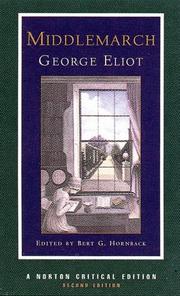
Middlemarch
by George Eliot
Eliot's 1871 masterpiece — the most direct Victorian predecessor to Howards End in scope and moral seriousness. Both novels ask what a good life requires and what destroys it; both are organized around the question of whether the social world can be reformed or whether it will always frustrate the exceptional individual's capacities. Eliot's Dorothea Brooke and Forster's Margaret Schlegel are both women of exceptional intelligence and feeling who attempt to make connections across the social world's divisions and pay for those attempts.
- 4
 Buy on Amazon
North and South
by Elizabeth Gaskell
Gaskell's 1855 companion in the tradition of the English novel about class, culture, and connection — Margaret Hale's move from the cultured south of England to the industrial north, her encounters with the mill owner John Thornton and the mill workers, and her gradual understanding of how different these worlds are and what connecting them requires. North and South is the Victorian predecessor to Howards End in its investigation of whether the cultivated and the practical classes can find common ground without destroying what each values.
- 5
 Buy on Amazon
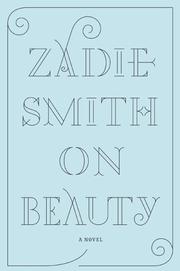
On Beauty
by Zadie Smith
Smith's 2005 companion — deliberately modeled on Howards End: two rival professors (one English, one Black American) at a New England university, their families, and the questions about art, beauty, and intellectual life that divide and connect them. On Beauty is the most direct contemporary homage to Howards End, transposing Forster's English class question into the American university context of race, gender, and cultural politics. Smith cited Forster's epigraph and novel as her explicit model.
- 6
 Buy on Amazon
The Remains of the Day
by Kazuo Ishiguro
Ishiguro's 1989 companion in the tradition of the English novel about the relationship between the practical life (service, efficiency, professional excellence) and the inner life (feeling, judgment, moral consciousness). Stevens the butler is Henry Wilcox taken to his logical extreme — a man who has so completely suppressed his inner life in favor of professional performance that he cannot recognize his own values or his own feelings even in retrospect. Both novels investigate the English character's distinctive suppression of the emotional in favor of the practical.
- 7
 Buy on Amazon
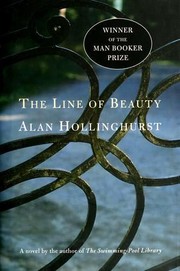
The Line of Beauty
by Alan Hollinghurst
Hollinghurst's 2004 Booker Prize-winning companion — Nick Guest, a young Oxford graduate living with a Conservative MP's family in the Thatcher years, and his gradual involvement in their world. The Line of Beauty and Howards End are companion English novels about the experience of a cultural outsider who attaches himself to a prosperous family and finds that the values of culture and connection he brings cannot survive in the world of money and power. Hollinghurst explicitly places himself in Forster's tradition.
- 8
 Buy on Amazon
Washington Square
by Henry James
James's 1880 companion in the transatlantic tradition of the novel about the relationship between money and personal connection — Catherine Sloper, her manipulative father, and the fortune-hunting Morris Townsend. Washington Square is the American version of the question Forster asks in Howards End: can genuine connection survive in a world organized around property and interest? James's answer (no — Catherine's intelligence and feeling are systematically misunderstood by everyone around her) is darker than Forster's; but both novels understand the human cost of the social world's indifference to inner life.
More Howards End Resources
More Reading Recommendations
View all →Monthly Newsletter
Never miss a big release
Get the most anticipated upcoming books delivered to your inbox once a month — no spam, no filler.
Monthly only. Unsubscribe anytime.
Book links are Amazon affiliate links. As an Amazon Associate, BookReleaseRadar earns from qualifying purchases at no extra cost to you.