Recommendations
Books Like Hedda Gabler
Best books to read after Hedda Gabler by Henrik Ibsen
Ibsen's 1891 masterwork — Hedda Tesman, née Gabler, suffocating in her respectable marriage and destroying those around her — is the most psychologically complex play in the theatrical canon and the most performed female role in classical drama. These recommendations extend the experience through Ibsen's other major plays, through the European theatrical tradition that Ibsen transformed, and through fiction and drama that investigates women's ambition, constraint, and the will to power in a world that offers no legitimate outlet for it.
- 1
 Buy on Amazon
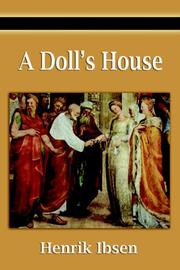
A Doll's House
by Henrik Ibsen
The essential companion — the earlier and more famous Ibsen play about a woman and the world that cannot contain her, and the direct counterpart to Hedda Gabler. Where Nora slams the door and leaves, Hedda shoots herself; where Nora discovers she is more than a doll, Hedda has always known she is more than a wife and has found no legitimate outlet for that knowledge. A Doll's House and Hedda Gabler are the two poles of Ibsen's thinking about women and freedom.
- 2Buy on Amazon
The Wild Duck
by Henrik Ibsen
The companion in the tradition of the play that interrogates idealism — Gregers Werle's truth-telling destroying the Ekdal family. The Wild Duck and Hedda Gabler are companion explorations of the person who cannot live within conventional constraints (Gregers; Hedda) and the destruction they cause in pursuit of their vision — but where Gregers is a tragic idealist, Hedda is a tragic aesthete, and the difference illuminates both plays.
- 3
 Buy on Amazon
Miss Julie
by August Strindberg
The Swedish contemporary companion — the one-act play about class, desire, and the seduction of the aristocratic Julie by the valet Jean. Miss Julie and Hedda Gabler are the two great Scandinavian plays of the 1880s-90s about women trapped by gender and class, and both end with the woman's death. Strindberg hated Ibsen and wrote Miss Julie partly in response to A Doll's House; reading them together shows the full range of Scandinavian naturalism's treatment of women.
- 4Buy on Amazon
Three Sisters
by Anton Chekhov
The Russian companion — the Prozorov sisters who cannot get to Moscow. Three Sisters and Hedda Gabler are companion investigations of women of exceptional intelligence whose ambition cannot find expression in the world they inhabit — but Chekhov's sisters endure their constraint with a kind of elegiac acceptance while Hedda's refusal to accept hers takes everyone down with her.
- 5
 Buy on Amazon
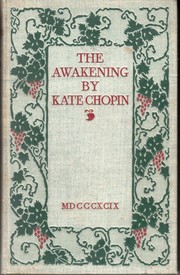
The Awakening
by Kate Chopin
The American contemporary companion — Edna Pontellier's gradual awakening to her own desires and to the impossibility of living them. The Awakening (1899) and Hedda Gabler (1891) are the two great fin-de-siècle works about the woman who cannot conform to what the social world requires of her: Edna swims out to sea; Hedda shoots herself. Both refuse to moralize about their protagonists and both refuse any consolation.
- 6
 Buy on Amazon
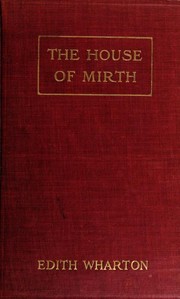
The House of Mirth
by Edith Wharton
Wharton's novel companion — Lily Bart's gradual exclusion from New York society. The House of Mirth and Hedda Gabler are companion studies in the destruction of a woman who has been educated to be an ornament and who cannot survive when the ornamental world withdraws its support — though Lily's tragedy is social and economic while Hedda's is psychological and aesthetic.
- 7
 Buy on Amazon
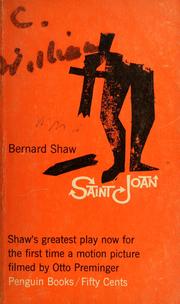
Saint Joan
by George Bernard Shaw
Shaw's 1923 companion in the tradition of the play about a woman of exceptional will who the social world cannot contain — Joan of Arc's conviction, her recantation, and her burning. Shaw was Ibsen's most important British disciple, and Saint Joan is the play in which he most fully explores the same question as Hedda Gabler: what the social world does to a woman who refuses to accept the identity it assigns her.
- 8
 Buy on Amazon
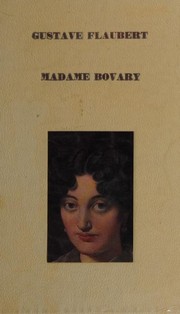
Madame Bovary
by Gustave Flaubert
Flaubert's 1857 novel companion and the most important literary precursor to Hedda Gabler — Emma Bovary's romantic fantasies and her inability to find adequate expression for her desires within the constraints of her provincial marriage. Emma Bovary and Hedda Gabler are the two great nineteenth-century studies in the destruction of the woman whose exceptional sensibility cannot find an adequate object, and Ibsen certainly knew Flaubert's novel.
More Hedda Gabler Resources
More Reading Recommendations
View all →Monthly Newsletter
Never miss a big release
Get the most anticipated upcoming books delivered to your inbox once a month — no spam, no filler.
Monthly only. Unsubscribe anytime.
Book links are Amazon affiliate links. As an Amazon Associate, BookReleaseRadar earns from qualifying purchases at no extra cost to you.