Recommendations
Books Like Grit
Best books to read after Grit by Angela Duckworth
Grit argues that passion and perseverance matter more than talent — and that the belief in effortful improvement is itself a kind of advantage. These 8 books provide the psychological, neuroscientific, and sociological context for understanding what grit is, where it comes from, and what it can and cannot explain.
- 1
 Buy on Amazon
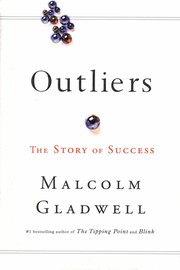
Outliers
by Malcolm Gladwell
Gladwell's 2008 examination of the structural context behind extraordinary success is in direct conversation with Grit: Duckworth's research suggests that grit — the individual psychological trait of passionate perseverance — is what allows people to accumulate the 10,000 hours that Gladwell identifies as the mechanism of mastery, filling in the psychological link between structural opportunity and extraordinary performance.
- 2
 Buy on Amazon
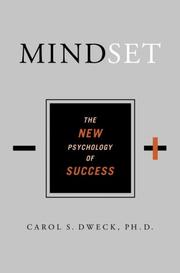
Mindset
by Carol S. Dweck
Dweck's 2006 foundational book on growth versus fixed mindset is the essential psychological companion to Grit: a growth mindset (believing abilities can be developed) is the belief structure that makes grit possible — people with a fixed mindset tend to give up when things get hard because failure feels like evidence of limited ability, while growth-mindset people persist because failure is information about where more effort is needed.
- 3
 Buy on Amazon
Range
by David Epstein
Epstein's 2019 book provides the most direct intellectual challenge to Grit's specialization-and-persistence model: in 'wicked' learning environments (most real-world domains), the breadth of experience and willingness to switch domains that Grit might read as lack of commitment actually produces better long-term outcomes than single-minded perseverance toward a single goal.
- 4
 Buy on Amazon
Peak
by Anders Ericsson
Ericsson's 2016 account of deliberate practice — the research that inspired Gladwell's 10,000-hour rule — is the most important scientific companion to Grit: Ericsson argues that what matters is not mere hours of practice but specifically designed, feedback-rich, progressively challenging 'deliberate practice,' and Duckworth's grit is partly the disposition to keep doing deliberate practice when it becomes uncomfortable.
- 5
 Buy on Amazon
Thinking, Fast and Slow
by Daniel Kahneman
Kahneman's 2011 synthesis provides the cognitive framework for understanding how grit works at the neural level: deliberate practice builds System 1 automaticity (pattern recognition and skill execution that become effortless) through sustained System 2 effort (conscious, effortful attention to feedback and correction), and grit is the disposition to keep engaging System 2 until System 1 has fully developed.
- 6
 Buy on Amazon
The Power of Habit
by Charles Duhigg
Duhigg's 2012 account of the neuroscience and psychology of habit formation is the behavioral complement to Grit's psychological argument: where Duckworth focuses on the psychological trait of perseverance, Duhigg focuses on the environmental and behavioral systems that make sustained effort automatic rather than dependent on willpower.
- 7
 Buy on Amazon
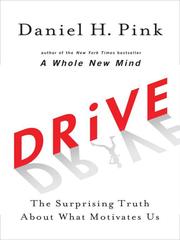
Drive
by Daniel H. Pink
Pink's 2009 argument about human motivation — that autonomy, mastery, and purpose are more powerful motivators than money for most knowledge work — provides the motivational framework for understanding what fuels grit: passion, in Duckworth's model, is the intrinsic motivation that Duhigg's habit loop and Pink's motivation research both identify as the engine of sustained effort.
- 8
 Buy on Amazon
Educated
by Tara Westover
Westover's 2018 memoir of teaching herself from a survivalist Idaho childhood to a Cambridge PhD is the most vivid real-world illustration of Duckworth's grit thesis: an extraordinary amount of passionate perseverance toward a long-term goal in the face of enormous obstacles, producing outcomes that would be incomprehensible to any talent-based model of success.
More Grit Resources
More Reading Recommendations
View all →Monthly Newsletter
Never miss a big release
Get the most anticipated upcoming books delivered to your inbox once a month — no spam, no filler.
Monthly only. Unsubscribe anytime.
Book links are Amazon affiliate links. As an Amazon Associate, BookReleaseRadar earns from qualifying purchases at no extra cost to you.