Recommendations
Books Like Freakonomics
Best books to read after Freakonomics by Steven D. Levitt
Freakonomics showed that economic tools — incentive analysis, natural experiments, data — can illuminate almost any aspect of human behavior. These 8 books extend that project across behavioral science, sociology, and the study of how institutions and individuals actually work.
- 1
 Buy on Amazon
Thinking, Fast and Slow
by Daniel Kahneman
Kahneman's 2011 synthesis of cognitive psychology research is the most important companion to Freakonomics in the genre of popular social science: where Freakonomics uses economic analysis of incentives to explain counterintuitive patterns, Kahneman uses cognitive psychology to explain why human judgment is systematically biased in the first place — together they explain both what people do and why they do it.
- 2
 Buy on Amazon
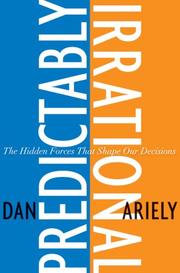
Predictably Irrational
by Dan Ariely
Ariely's 2008 behavioral economics bestseller is the closest companion to Freakonomics in the pop-social-science genre: organized around specific counterintuitive experiments (why free offers distort behavior, why prices affect perceived quality, why social norms and market norms don't mix), it applies psychological analysis to the same broad question — why do people behave the way they do — that Freakonomics answers with economics.
- 3
 Buy on Amazon
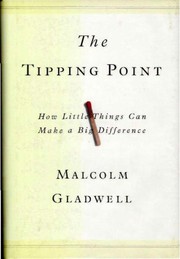
The Tipping Point
by Malcolm Gladwell
Gladwell's 2000 debut — about the specific, unexpected factors that cause social phenomena to 'tip' from local trends to epidemics — is the founding book of the pop social science genre that Freakonomics dominated, and the one book it is most directly in conversation with: where Gladwell focuses on the social dynamics of change, Levitt focuses on the incentive structures that drive behavior.
- 4
 Buy on Amazon
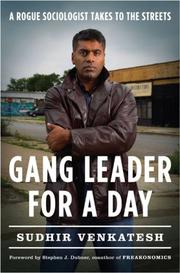
Gang Leader for a Day
by Sudhir Venkatesh
Venkatesh's 2008 sociological memoir about studying a Chicago housing project gang includes the specific data — the gang's financial records — that became the most famous chapter of Freakonomics, explaining why most drug dealers earn below minimum wage. Reading Gang Leader for a Day gives the human context for the economic analysis that Freakonomics strips away.
- 5
 Buy on Amazon
The Black Swan
by Nassim Nicholas Taleb
Taleb's 2007 argument about the role of rare, unpredictable events in history is a direct critique of the kind of analytical confidence that Freakonomics represents — Taleb would argue that Levitt's data-driven retrospective explanations are precisely the kind of narrative fallacy that his book documents. Reading them together is an education in the limits of social science.
- 6
 Buy on Amazon
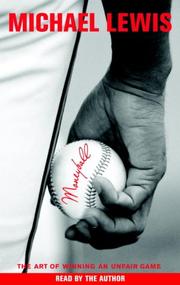
Moneyball
by Michael Lewis
Lewis's 2003 account of the Oakland Athletics' use of statistical analysis to build a competitive baseball team is the most important book in the data-driven decision-making genre that Freakonomics popularized: both books argue that careful empirical analysis reveals truths that expert intuition misses, and that the experts who resist the data are protecting their status rather than the truth.
- 7
 Buy on Amazon
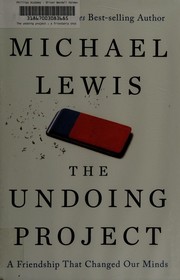
The Undoing Project
by Michael Lewis
Lewis's 2016 account of the Kahneman-Tversky partnership provides the psychological foundation for understanding why Freakonomics' counterintuitive findings are possible in the first place: if human judgment is systematically biased in predictable ways, then careful empirical analysis should routinely overturn confident intuitions — which is exactly what Freakonomics does.
- 8
 Buy on Amazon
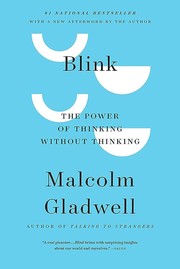
Blink
by Malcolm Gladwell
Gladwell's 2005 account of 'thin-slicing' — the way experts make accurate rapid judgments from minimal information — is in interesting tension with Freakonomics: where Gladwell argues that intuitive judgment is sometimes more reliable than deliberate analysis, Levitt and Dubner argue that intuition consistently leads experts astray, and that careful data analysis reveals a different world than expert intuition describes.
More Freakonomics Resources
More Reading Recommendations
View all →Monthly Newsletter
Never miss a big release
Get the most anticipated upcoming books delivered to your inbox once a month — no spam, no filler.
Monthly only. Unsubscribe anytime.
Book links are Amazon affiliate links. As an Amazon Associate, BookReleaseRadar earns from qualifying purchases at no extra cost to you.