Recommendations
Books Like Fooled by Randomness
Best books to read after Fooled by Randomness by Nassim Nicholas Taleb
Fooled by Randomness argues that humans systematically underestimate the role of chance in outcomes and overestimate the role of skill — a problem that pervades financial markets, professional life, and everyday success stories. These 8 books extend that argument into probability theory, behavioral economics, statistics, and the science of judgment.
- 1
 Buy on Amazon
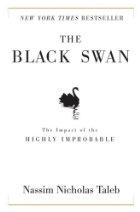
The Black Swan
by Nassim Nicholas Taleb
The direct sequel in the Incerto series — extending the randomness argument to history-dominating rare events and building the most complete statement of the Black Swan thesis that Fooled by Randomness foreshadows.
- 2
 Buy on Amazon
Thinking, Fast and Slow
by Daniel Kahneman
The comprehensive account of the cognitive biases and heuristics that lead people to make systematic errors of judgment — including the overconfidence, narrative fallacy, and hindsight bias that Taleb discusses in Fooled by Randomness.
- 3
 Buy on Amazon
The Drunkard's Walk
by Leonard Mlodinow
A clear and entertaining account of how randomness operates in everyday life — covering the same probability theory and statistical reasoning that underlies Taleb's argument, but from a more accessible and less polemical angle.
- 4
 Buy on Amazon
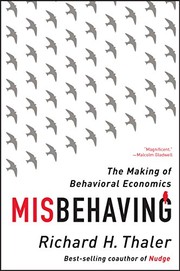
Misbehaving
by Richard H. Thaler
The memoir of behavioral economics — the discipline that documented, systematically, all the ways human beings fail to behave like the rational agents classical economics assumed — providing the academic framework for the cognitive errors Taleb describes.
- 5
 Buy on Amazon
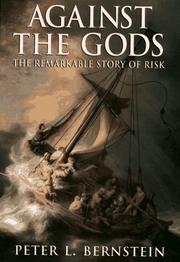
Against the Gods
by Peter L. Bernstein
The history of how humans learned to quantify and reason about risk — the intellectual backstory to Taleb's argument about our failure to reason about probability correctly despite centuries of mathematical progress.
- 6
 Buy on Amazon
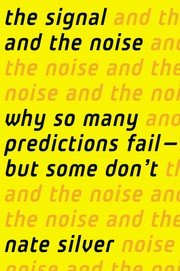
The Signal and the Noise
by Nate Silver
Nate Silver's account of the art and science of prediction — covering the domains (weather, earthquakes, poker, elections) where forecasting works and doesn't work — which complements Taleb's argument about the limits of forecasting and the role of randomness.
- 7
 Buy on Amazon
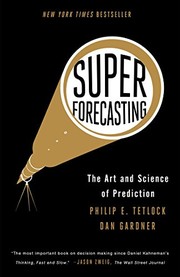
Superforecasting
by Philip E. Tetlock
The research behind 'superforecasters' — the rare people who are actually better than chance at predicting geopolitical events — offering the empirical counterpoint to Taleb's argument: some skill does exist in prediction, if you know where and how to look for it.
- 8
 Buy on Amazon
Skin in the Game
by Nassim Nicholas Taleb
The ethical culmination of the Incerto argument — building on the epistemological foundation of Fooled by Randomness to argue that those who make decisions should bear their consequences personally.
More Fooled by Randomness Resources
More Reading Recommendations
View all →Monthly Newsletter
Never miss a big release
Get the most anticipated upcoming books delivered to your inbox once a month — no spam, no filler.
Monthly only. Unsubscribe anytime.
Book links are Amazon affiliate links. As an Amazon Associate, BookReleaseRadar earns from qualifying purchases at no extra cost to you.