Recommendations
Books Like Ficciones
Best books to read after Ficciones by Jorge Luis Borges
Ficciones is one of the most influential books of the twentieth century — seventeen stories that changed what fiction is capable of and influenced virtually every postmodernist who came after. If the collection's extraordinary formal inventiveness and its use of imaginary documents and impossible premises to raise genuine philosophical questions moved you, these books share its concern with the relationship between knowledge and reality, its interest in labyrinths and infinite regress, and its conviction that the most serious philosophical questions can be approached through fiction.
- 1
 Buy on Amazon
Labyrinths
by Jorge Luis Borges
The essential companion and alternative introduction — the English-language collection that introduced Borges to Anglo-American readers, containing stories from Ficciones and El Aleph alongside essays and parables; for readers who want to continue with Borges and find everything they need in one volume
- 2
 Buy on Amazon
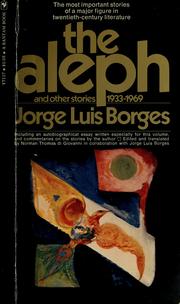
The Aleph and Other Stories
by Jorge Luis Borges
The companion collection — 'The Aleph' (a point in space that contains all other points), 'Death and the Compass,' 'The Man on the Threshold'; the essential next step after Ficciones and showing how Borges extended and varied the methods of the earlier collection
- 3
 Buy on Amazon
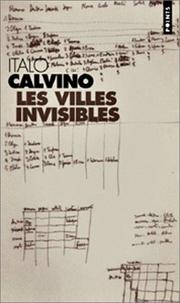
Invisible Cities
by Italo Calvino
Calvino's meditation on imaginary cities — the most important parallel to Borges in the European tradition; Calvino acknowledged Borges as a fundamental influence, and Invisible Cities's 55 imaginary cities are in direct dialogue with Borges's imaginary worlds; where Borges uses the essay and the review as his formal disguise, Calvino uses the dialogue
- 4
 Buy on Amazon
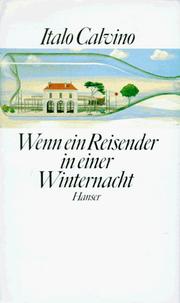
If on a winter's night a traveler
by Italo Calvino
The companion in the metafictional tradition — the novel that addresses the reader directly and organizes itself as a series of novel beginnings; Calvino's most Borgesian work, and the one that most directly develops the implication of Borges's 'Pierre Menard, Author of the Quixote' into a full novel
- 5
 Buy on Amazon
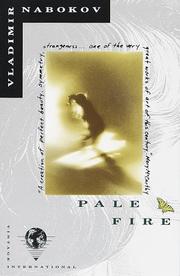
Pale Fire
by Vladimir Nabokov
Nabokov's novel organized as an unreliable commentary on a poem — the most Borgesian work in the English-language tradition; where Borges uses the fictional review of an imaginary book, Nabokov uses the fictional commentary on a real poem; both are organized around the gap between what the text says and what the narrator claims it says
- 6
 Buy on Amazon
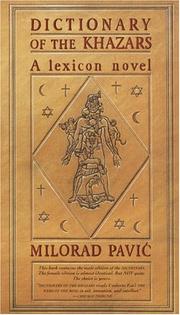
Dictionary of the Khazars
by Milorad Pavić
Pavić's novel organized as a lexicon of a vanished people — entries that can be read in any order in three different versions; the most direct structural parallel to Borges in the tradition of the novel that refuses conventional linear reading and organizes itself as an imaginary encyclopedia
- 7
 Buy on Amazon
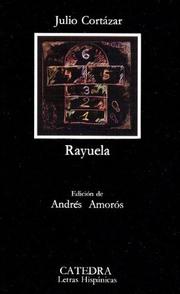
Hopscotch
by Julio Cortázar
The essential companion in the Latin American tradition — the most formally radical Latin American novel, readable in two different orders; Cortázar and Borges define the two poles of Argentine literary genius: Borges's compression and formal perfection, Cortázar's length and formal radicalism
- 8
 Buy on Amazon
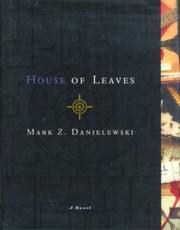
House of Leaves
by Mark Z. Danielewski
Danielewski's novel about a film about a house that is larger on the inside than on the outside — the most important recent American work in the tradition of the literary labyrinth; organized as a footnoted academic text about a documentary that may not exist, it is the most elaborate development of Borges's technique of the fictional document in recent American fiction
More Ficciones Resources
More Reading Recommendations
View all →Monthly Newsletter
Never miss a big release
Get the most anticipated upcoming books delivered to your inbox once a month — no spam, no filler.
Monthly only. Unsubscribe anytime.
Book links are Amazon affiliate links. As an Amazon Associate, BookReleaseRadar earns from qualifying purchases at no extra cost to you.