Recommendations
Books Like Endgame
Best books to read after Endgame by Samuel Beckett
Beckett's 1957 masterwork — Hamm blind and paralyzed in a chair, Clov unable to sit, Nagg and Nell in ashbins, the world outside the shelter apparently dead — is the most formally perfect of his plays and the most concentrated investigation of dependency, power, and the impossibility of ending. These recommendations extend the experience through Beckett's other major works, through the Theater of the Absurd, and through fiction and drama that investigates the terminal condition of consciousness and the strange endurance of those who cannot go on but do.
- 1
 Buy on Amazon
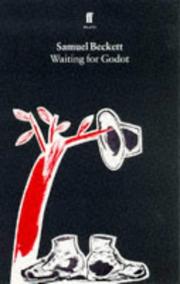
Waiting for Godot
by Samuel Beckett
The companion and the play that made Beckett famous — Vladimir and Estragon waiting for Godot who never comes. Waiting for Godot and Endgame are the two essential Beckett plays: Waiting for Godot is organized around external absence (Godot), Endgame around internal ending (the game running out). Both are funnier in performance than they appear on the page, and both are the most influential plays of the postwar era.
- 2Buy on Amazon
Three Sisters
by Anton Chekhov
The most direct theatrical precursor — the Prozorov sisters waiting for Moscow, the talk that fills the gap, the comedy that is simultaneously elegy. Beckett acknowledged Chekhov as the most important influence on his theater, and the structural principle of Endgame (a group of characters in a confined space, waiting, enduring, unable to leave) is a development of Chekhov's method pushed to its formal limit.
- 3
 Buy on Amazon
The Chairs
by Eugène Ionesco
The French contemporary companion in the Theater of the Absurd — the Old Man and Old Woman filling a room with empty chairs for the guests who will hear the Old Man's message, and the Orator who cannot speak. The Chairs and Endgame are companion works: both are organized around the impossibility of communication, both use the minimal stage as a metaphor for consciousness, and both end with the destruction of the message the play was organized around delivering.
- 4
 Buy on Amazon
The Birthday Party
by Harold Pinter
Pinter's 1958 companion in the tradition of the play organized around menace and the impossibility of escape — Stanley Weber at his birthday party, the arrival of Goldberg and McCann. The Birthday Party and Endgame are contemporary explorations of the same situation: a person confined in a room with others, subjected to an incomprehensible process, with no possibility of genuine escape. Pinter acknowledged Beckett as his primary theatrical influence.
- 5
 Buy on Amazon
The Trial
by Franz Kafka
Kafka's prose companion in the tradition of the protagonist subjected to an incomprehensible process — Josef K.'s arrest and trial. The Trial and Endgame share the same formal principle: a protagonist who cannot leave or fully understand the situation in which he is enclosed, whose attempts to comprehend the situation only intensify it. Beckett read Kafka carefully and the influence is pervasive.
- 6
 Buy on Amazon
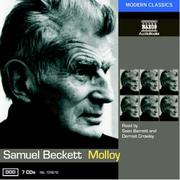
Molloy
by Samuel Beckett
The prose companion and the beginning of the Beckett trilogy — Molloy's journey toward his mother and Moran's journey to find Molloy, both collapsing into immobility. Molloy is the best entry point into Beckett's prose for readers who want to understand what Endgame is doing: both are organized around the same reduction (the body deteriorating, the space contracting, the language failing) and both demonstrate that the comedy of Beckett is structural, not decorative.
- 7
 Buy on Amazon
Nausea
by Jean-Paul Sartre
The philosophical companion in the existentialist tradition — Antoine Roquentin's experience of the contingency of all existence, expressed as a physical nausea. Beckett's Endgame is in dialogue with Sartre's existentialism (the absurdity of enduring, the impossibility of meaning) though Beckett rejected the existentialist label; the connection is in the shared postwar experience of consciousness after the concentration camps and the atom bomb.
- 8
 Buy on Amazon
The Castle
by Franz Kafka
The prose companion in the tradition of the protagonist who can never arrive — K.'s endless attempt to reach the castle and the bureaucratic obstruction that prevents it. The Castle and Endgame share the same formal principle: the protagonist in a situation that cannot be resolved, where the obstacle is not external but structural, where the attempt to escape or arrive only generates more waiting. Both are funny and both are terrible.
More Endgame Resources
More Reading Recommendations
View all →Monthly Newsletter
Never miss a big release
Get the most anticipated upcoming books delivered to your inbox once a month — no spam, no filler.
Monthly only. Unsubscribe anytime.
Book links are Amazon affiliate links. As an Amazon Associate, BookReleaseRadar earns from qualifying purchases at no extra cost to you.