Recommendations
Books Like Elective Affinities
Best books to read after Elective Affinities by Goethe
Readers drawn into Goethe's clinical examination of passion and marriage will find companion works in the European tradition of the adultery novel, in the great realist novels that developed his theme, and in Goethe's own other fiction.
- 1
 Buy on Amazon
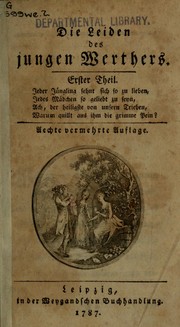
The Sorrows of Young Werther
by Johann Wolfgang von Goethe
Goethe's other great novel and the necessary companion to Elective Affinities — where Werther is all passion and immediacy, Elective Affinities is controlled and scientific; reading both gives the full range of Goethe's fiction and the difference between youthful Romanticism and mature irony.
- 2
 Buy on Amazon
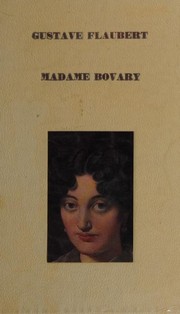
Madame Bovary
by Gustave Flaubert
The French realist novel that inherits Elective Affinities' clinical examination of romantic illusion and marital dissatisfaction — where Goethe examines passion through the chemical metaphor with Olympian detachment, Flaubert examines Emma Bovary through free indirect discourse with intimate but equally analytic precision; the most important development of Goethe's concern in the realist tradition.
- 3Buy on Amazon
Anna Karenina
by Leo Tolstoy
The Russian novel that is Elective Affinities' grandest successor — Tolstoy develops the same question (what do human beings owe to social institutions vs. authentic feeling?) on a much larger canvas and in a much more fully realized social world; Tolstoy knew Goethe's novel and the parallel is conscious.
- 4
 Buy on Amazon
The Golden Bowl
by Henry James
The late James novel that most closely approaches Elective Affinities' formal perfection and moral ambiguity — where Goethe examines a married couple and two intruders through the chemical metaphor, James examines a similar foursome through his late style; the most refined treatment of the same problem in modernist fiction.
- 5
 Buy on Amazon
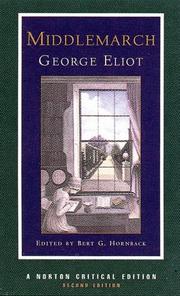
Middlemarch
by George Eliot
The Victorian novel that explores the same question as Elective Affinities (what do we owe to the social institutions that bind us vs. our authentic desires?) in the most fully realized social world — Dorothea and Lydgate's marriages explore the same territory as Eduard and Charlotte's, but with a more explicitly moral framework.
- 6
 Buy on Amazon
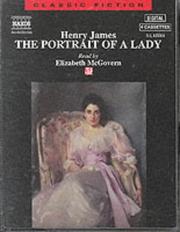
The Portrait of a Lady
by Henry James
The earlier James novel that places the Goethe question in an American-European context — Isabel Archer's marriage to Osmond and the social forces that entrap her develop Elective Affinities' concern with passion and convention in James's earlier, more accessible style.
- 7
 Buy on Amazon
Effi Briest
by Theodor Fontane
The German realist novel that is the most direct national successor to Elective Affinities — Fontane's tale of a young woman's adultery and its consequences in Prussian society (1896) applies the same cold social-scientific intelligence as Goethe to a more modern setting; the best German development of Goethe's concern.
- 8
 Buy on Amazon
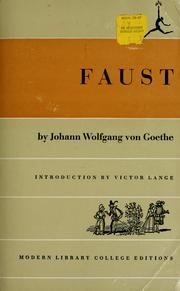
Faust, Part I
by Johann Wolfgang von Goethe
Goethe's poetic masterpiece written alongside Elective Affinities — reading Faust alongside the novel gives the fullest picture of Goethe's mature imagination: where Elective Affinities applies scientific detachment to passion, Faust applies poetic grandeur to the same question of what human beings are willing to risk for experience.
More Elective Affinities Resources
More Reading Recommendations
View all →Monthly Newsletter
Never miss a big release
Get the most anticipated upcoming books delivered to your inbox once a month — no spam, no filler.
Monthly only. Unsubscribe anytime.
Book links are Amazon affiliate links. As an Amazon Associate, BookReleaseRadar earns from qualifying purchases at no extra cost to you.