Recommendations
Books Like Demian
Best books to read after Demian by Hermann Hesse
Hesse's 1919 coming-of-age novel — Emil Sinclair's encounter with the mysterious Max Demian, who leads him from conventional bourgeois morality toward self-knowledge through the gnostic Abraxas — was the spiritual touchstone of the post-WWI generation. These recommendations extend the experience through Hesse's other major works, through European coming-of-age novels that share its investigation of the young man's formation and his rejection of received values, and through fiction that uses the encounter with a teacher figure to investigate the development of consciousness.
- 1
 Buy on Amazon
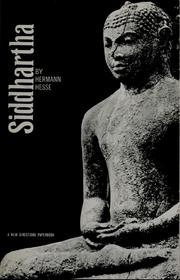
Siddhartha
by Hermann Hesse
Hesse's 1922 companion and the most natural next novel — the serene, Eastern version of the same journey from received values to self-discovered ones that Demian traces in its turbulent, Western form. Where Demian is saturated with Jungian psychology, Nietzschean values, and the specific crisis of the First World War, Siddhartha distills the same quest into a spare, universal, lyrical form set in the world of the historical Buddha.
- 2
 Buy on Amazon
Steppenwolf
by Hermann Hesse
Hesse's 1927 companion and the most psychologically complex of his major works — Harry Haller's experience of himself as divided between man and wolf, unable to find a social existence adequate to his nature. Where Demian is a young man's novel (the discovery of the self), Steppenwolf is a middle-aged man's novel (the crisis of a self that has been found but cannot be sustained) — both are investigations of what it means to be a person whose nature exceeds the social world that formed them.
- 3
 Buy on Amazon
A Portrait of the Artist as a Young Man
by James Joyce
Joyce's 1916 companion in the European tradition of the coming-of-age novel about the formation and rejection of the social world — Stephen Dedalus's progressive detachment from family, religion, country, and literary convention. Both Demian and Portrait trace a highly self-conscious young protagonist's progressive discovery that the values he was formed by are inadequate to his nature, and both end with the protagonist preparing to leave — Demian through the war, Portrait through Stephen's departure to forge the uncreated conscience of his race.
- 4Buy on Amazon
The Catcher in the Rye
by J.D. Salinger
Salinger's 1951 companion in the tradition of the coming-of-age novel about a young man who cannot accept the 'phoniness' of the adult world — Holden Caulfield's weekend in New York after his expulsion from Pencey Prep. Both Demian and The Catcher in the Rye are structured around a young protagonist's sense that the world around him is organized around false values, and both were adopted by their respective generations (post-WWI Germany; postwar America) as validations of the feeling that conventional adulthood is not worth aspiring to.
- 5
 Buy on Amazon
The Bell Jar
by Sylvia Plath
Plath's 1963 companion — Esther Greenwood's breakdown and gradual recovery in 1950s Boston — is the most important mid-century American coming-of-age novel about the failure of conventional values to accommodate a young woman's consciousness. Both Demian and The Bell Jar are about the crisis that occurs when a young person's inner life cannot find a form adequate to it in the social world, and both use the protagonist's breakdown as the vehicle for a deeper self-knowledge that conventional success cannot provide.
- 6
 Buy on Amazon
Nausea
by Jean-Paul Sartre
Sartre's 1938 companion in the European tradition of the philosophical novel about consciousness discovering itself against the brute indifference of the world — Antoine Roquentin's experience of the Nausea. Both Demian and Nausea are structured as a young man's journal of his encounter with a reality beyond conventional surfaces, and both arrive at a conclusion that is more discovery than resolution: Roquentin discovers that he can write a book; Emil Sinclair discovers that Demian lives within him.
- 7
 Buy on Amazon
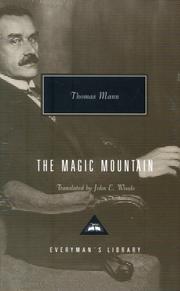
The Magic Mountain
by Thomas Mann
Mann's 1924 companion in the German literary tradition of the Bildungsroman of ideas — Hans Castorp's seven years in a Swiss sanatorium as the occasion for a vast philosophical education about European civilization at the point of its breakdown. The Magic Mountain and Demian are companion German novels about the formation of a young man's consciousness through encounter with figures who represent opposing values (Settembrini and Naphta in Mann; Demian and the conventional world in Hesse) — both written in the same historical moment of European crisis.
- 8
 Buy on Amazon
Thus Spoke Zarathustra
by Friedrich Nietzsche
Nietzsche's 1883–1885 philosophical prose poem is the essential philosophical text that underlies Demian most directly. Hesse was deeply influenced by Nietzsche, and the novel's central ideas — the distinction between the people of Abel (conventional moral life) and the people of Cain (the higher type who thinks for himself), the gnostic Abraxas who encompasses both good and evil — are transpositions of Nietzschean ideas about the will to power, the Übermensch, and slave morality into novelistic form.
More Demian Resources
More Reading Recommendations
View all →Monthly Newsletter
Never miss a big release
Get the most anticipated upcoming books delivered to your inbox once a month — no spam, no filler.
Monthly only. Unsubscribe anytime.
Book links are Amazon affiliate links. As an Amazon Associate, BookReleaseRadar earns from qualifying purchases at no extra cost to you.