Recommendations
Books Like Confessions
Best books to read after Rousseau's Confessions
Readers engaged by Rousseau's revolutionary self-revelation will find the autobiography tradition he founded, the Romantic works he directly inspired, and the great confessional autobiographies that developed his mode in different periods and cultures.
- 1
 Buy on Amazon
Reveries of the Solitary Walker
by Jean-Jacques Rousseau
Rousseau's final autobiographical work, written in the last years of his life as a series of meditations on solitude, nature, and the self — where the Confessions is narrative, the Reveries is pure reflection; the essential companion to the Confessions for the fullest picture of Rousseau's self-examination.
- 2
 Buy on Amazon
The Prelude
by William Wordsworth
The English Romantic poem most directly descended from Rousseau's Confessions — Wordsworth's autobiographical poem about 'the growth of a poet's mind' develops the same project (the self as subject, childhood as formative, nature as educator) in verse; the two works together define the Romantic autobiography tradition.
- 3Buy on Amazon
Confessions
by Saint Augustine
The foundational predecessor in the autobiography tradition — Augustine's Confessions (4th century CE) established the form that Rousseau was both inheriting and transforming; where Augustine's confessions are to God, Rousseau's are to the reader; reading both shows the full arc of Western autobiography from its origins.
- 4
 Buy on Amazon
René
by François-René de Chateaubriand
The French Romantic text most directly descended from Rousseau's confessional mode — Chateaubriand acknowledged Rousseau as the source of the mal du siècle he was diagnosing; reading René alongside the Confessions shows the direct line from Rousseau's confessional autobiography to French Romantic fiction.
- 5
 Buy on Amazon
Confessions of an English Opium-Eater
by Thomas De Quincey
The English Romantic confession most directly modeled on Rousseau — De Quincey's account of his opium addiction (1821) inherits Rousseau's mode of candid self-revelation and extends it to shameful physical experiences; the most important English development of Rousseau's confessional autobiography.
- 6
 Buy on Amazon
My Life
by Richard Wagner
The nineteenth-century autobiography that most aggressively develops Rousseau's mode of self-justification — Wagner's account of his own genius and others' failure to understand it takes Rousseau's self-presentation to its most unapologetic extreme; a fascinating if disturbing companion to the Confessions.
- 7
 Buy on Amazon
The Education of Henry Adams
by Henry Adams
The American autobiography that most brilliantly inverts Rousseau's method — where Rousseau shows a man by his most intimate experiences, Adams shows 'Henry Adams' in the third person as a specimen of historical forces; the most intelligent formal response to Rousseau's confessional mode in American literature.
- 8
 Buy on Amazon
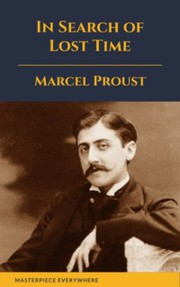
In Search of Lost Time
by Marcel Proust
The novel that is Rousseau's most important literary successor — Proust's meditation on involuntary memory, the nature of the self in time, and the relationship between past and present experience is the fullest development of the project Rousseau began in the Confessions; the twentieth century's version of Rousseau's ambition.
More Confessions Resources
More Reading Recommendations
View all →Monthly Newsletter
Never miss a big release
Get the most anticipated upcoming books delivered to your inbox once a month — no spam, no filler.
Monthly only. Unsubscribe anytime.
Book links are Amazon affiliate links. As an Amazon Associate, BookReleaseRadar earns from qualifying purchases at no extra cost to you.