Recommendations
Books Like The Private Memoirs and Confessions of a Justified Sinner
Best books to read after The Confessions of a Justified Sinner by James Hogg
Readers who love The Confessions of a Justified Sinner — Hogg's Scottish Gothic masterpiece of the double, antinomian theology, and the unreliable narrator — will enjoy these works of Gothic fiction, psychological doubles, and the great tradition of the literature of obsession and spiritual corruption.
- 1
 Buy on Amazon
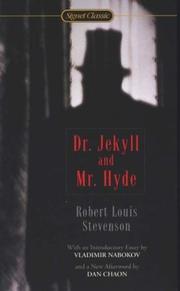
The Strange Case of Dr Jekyll and Mr Hyde
by Robert Louis Stevenson
The most direct heir to Hogg's double — Stevenson's novella makes explicit the split between respectable social self and hidden dark self that Hogg explores through Gil-Martin; Stevenson was Scottish and knew Hogg's novel; the two texts together define the Scottish Gothic tradition of the divided self.
- 2
 Buy on Amazon
Caleb Williams
by William Godwin
The English radical Gothic that runs alongside Hogg's Scottish tradition — Caleb's persecution by Falkland has the same quality of obsessive pursuit and psychological entanglement as Wringhim's relationship with Gil-Martin; both novels are about a man who cannot escape his pursuer.
- 3Buy on Amazon
Melmoth the Wanderer
by Charles Maturin
The Gothic novel most closely contemporary with Hogg's Confessions — Maturin's Faust-figure who sold his soul and haunts the centuries is the nearest equivalent to Gil-Martin in power and theological seriousness; the two together are the last great works of the first Gothic tradition.
- 4Buy on Amazon
The Double
by Fyodor Dostoevsky
Dostoevsky's novella about a civil servant who encounters his exact double directly continues Hogg's tradition — the double as a figure for the divided self, the anxiety of identity, and the social pressure that creates psychological fragmentation; essential companion reading.
- 5
 Buy on Amazon
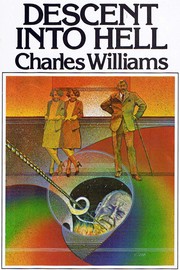
Descent into Hell
by Charles Williams
The twentieth-century theological thriller that most fully develops Hogg's concerns — Williams's novel about substituted suffering and the choice of hell echoes the antinomian theology of the Confessions in the framework of Christian supernatural fiction.
- 6
 Buy on Amazon
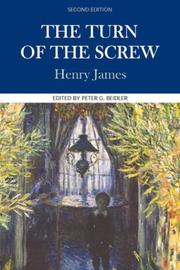
The Turn of the Screw
by Henry James
James's ghost story deploys the same formal ambiguity as the Confessions — the reader can never determine whether the supernatural events are real or psychological projections of the narrator; the novella's uncertainty about its own genre is directly in Hogg's tradition.
- 7
 Buy on Amazon
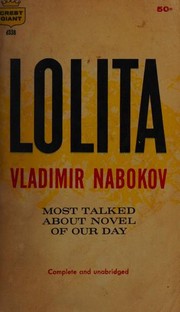
Lolita
by Vladimir Nabokov
Nabokov cited the Confessions as a formal precursor — Humbert Humbert's self-justifying narration, in which the reader can see through the narrator's rationalizations to the horror beneath, is the most technically sophisticated development of the unreliable-narrator method Hogg invented.
- 8
 Buy on Amazon
The Picture of Dorian Gray
by Oscar Wilde
Wilde's novel of the divided self — the portrait that ages while the man stays young is the Victorian equivalent of Gil-Martin's mysterious doubling; both works explore the moral consequences of the separation between appearance and reality in a self that has rejected conventional morality.
More The Private Memoirs and Confessions of a Justified Sinner Resources
More Reading Recommendations
View all →Monthly Newsletter
Never miss a big release
Get the most anticipated upcoming books delivered to your inbox once a month — no spam, no filler.
Monthly only. Unsubscribe anytime.
Book links are Amazon affiliate links. As an Amazon Associate, BookReleaseRadar earns from qualifying purchases at no extra cost to you.