Recommendations
Books Like Clarissa
Best books to read after Clarissa by Samuel Richardson
Samuel Richardson's Clarissa is the longest novel in English — a million words of epistolary moral drama about Clarissa Harlowe's virtue, Lovelace's brilliant libertinism, and the impossibility of the world they inhabit making room for a woman of genuine integrity. These recommendations extend the experience through Richardson's other novels and through the tradition of the epistolary and psychological novel that Clarissa inaugurated.
- 1
 Buy on Amazon
Pamela
by Samuel Richardson
Richardson's first novel — the story of Pamela Andrews, a servant girl who resists her employer's advances until he reforms and marries her. The predecessor to Clarissa in Richardson's development of the epistolary novel: Pamela raised the questions about female virtue and male power that Clarissa answers with Clarissa's greater moral seriousness.
- 2
 Buy on Amazon
Tom Jones
by Henry Fielding
Fielding wrote Tom Jones partly in explicit rivalry with Richardson — where Richardson's fiction is earnest, psychologically intense, and morally serious, Fielding's is comic, digressive, and skeptical of Richardson's moral program. Reading both together defines the two poles of the early English novel.
- 3
 Buy on Amazon
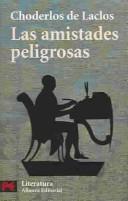
Les Liaisons Dangereuses
by Pierre Choderlos de Laclos
Laclos's 1782 French epistolary novel about two libertines who use letters as weapons in their social games is Lovelace's story told from inside the libertine perspective — equally concerned with the power dynamics of seduction, equally organized as an exchange of letters, and equally devastating in its understanding of how writing and feeling are related.
- 4
 Buy on Amazon
The Rape of the Lock
by Alexander Pope
Pope's 1712 mock-heroic poem about Belinda and the theft of her lock of hair is the satirical version of the social world that Clarissa inhabits — the same London society, the same pressure on female 'virtue' as social currency, seen from a comic distance rather than Richardson's tragic proximity.
- 5
 Buy on Amazon
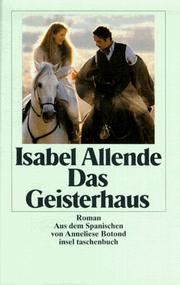
The House of the Spirits
by Isabel Allende
Allende's magical realist novel organized around a family's letters and documents across generations shares the epistolary form and the commitment to female experience and resilience under patriarchal pressure that Richardson inaugurated in Clarissa.
- 6
 Buy on Amazon
The Color Purple
by Alice Walker
Walker's epistolary novel about Celie's survival of abuse and her discovery of her own voice is the twentieth-century American counterpart to Clarissa's project — a woman writing herself into existence through letters, finding in language the self that the social world denies her.
- 7
 Buy on Amazon
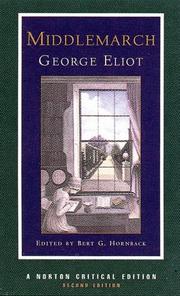
Middlemarch
by George Eliot
Eliot's Dorothea Brooke — a woman of great moral seriousness who cannot find a social world adequate to her capacities — is the Victorian successor to Clarissa in her combination of genuine virtue and social impossibility. Eliot's epigraph about those who lived faithfully a hidden life describes Clarissa as much as Dorothea.
- 8
 Buy on Amazon
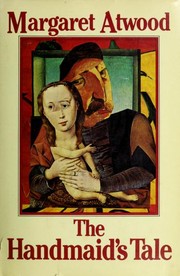
The Handmaid's Tale
by Margaret Atwood
Atwood's Offred — narrating her situation to a possible future audience, unable to speak freely, reduced to a reproductive function by a theocratic state — is the dystopian version of Clarissa's predicament. Both novels are about women whose letters or records are their only resource and whose virtue the system is organized to destroy.
More Clarissa Resources
More Reading Recommendations
View all →Monthly Newsletter
Never miss a big release
Get the most anticipated upcoming books delivered to your inbox once a month — no spam, no filler.
Monthly only. Unsubscribe anytime.
Book links are Amazon affiliate links. As an Amazon Associate, BookReleaseRadar earns from qualifying purchases at no extra cost to you.