Recommendations
Books Like Carmen
Best books to read after Carmen by Prosper Mérimée
Readers drawn to Carmen's frame narrative irony, its portrait of fatal obsession, and Mérimée's cool analytical prose will find Colomba as its companion and the tradition of European fiction about transgressive women and the men they destroy.
- 1
 Buy on Amazon
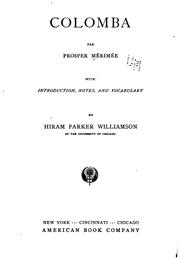
Colomba
by Prosper Mérimée
The companion Mérimée novella and the one that most directly demonstrates his range — where Carmen is a study in fatal sexual obsession told through the detached frame narrator, Colomba is a study in the honor code that structures a Corsican society; both novellas use an outsider narrator to document a social world whose values are incomprehensible to the mainland French observer.
- 2
 Buy on Amazon
Manon Lescaut
by Abbé Prévost
The eighteenth-century companion in the tradition of the fatal woman and the man who cannot escape her — Prévost's 1731 story of des Grieux's destruction by his love for the faithless Manon is the direct precursor to the Carmen story; both are frame narratives in which the narrator documents the protagonist's account of his own destruction, and both ask the reader to determine whether the fatal woman is responsible for the catastrophe or the man's obsession.
- 3
 Buy on Amazon
The Woman in White
by Wilkie Collins
The English companion in the tradition of the crime mystery with multiple narrators — Collins's 1859 novel uses overlapping first-person accounts to construct a story that no single narrator can tell completely, just as Mérimée's frame narrator in Carmen has to mediate between his own observation and Don José's confession; both writers use the frame narrative structure to create unreliable accounts of events the reader must interpret independently.
- 4
 Buy on Amazon
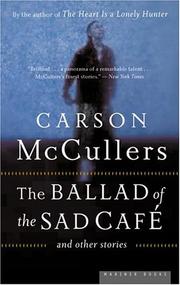
The Ballad of the Sad Café
by Carson McCullers
The American companion in the tradition of the grotesque love that destroys the lover — McCullers's 1951 novella about the triangular relationship between Miss Amelia, Marvin Macy, and the dwarf Lymon is the American Gothic equivalent of the Carmen triangle; both are studies in the asymmetry of desire, in which those who love most are most destroyed, and both use a laconic narrative distance to observe catastrophes of passion that the prose does not sentimentalize.
- 5
 Buy on Amazon
Théophile Gautier's 'Mademoiselle de Maupin'
by Théophile Gautier
The companion French Romantic novella about transgressive desire — Gautier's 1835 novel about a young man who falls in love with a woman disguised as a man is the companion text in the French Romantic tradition of the fatal and unknowable woman; both Carmen and Mademoiselle de Maupin make the woman's otherness and inaccessibility the source of her power over the male protagonist.
- 6Buy on Amazon
Anna Karenina
by Leo Tolstoy
The companion novel in the tradition of the woman who refuses social constraint and is destroyed for it — where Carmen's refusal of constraint is presented from outside (through Don José's obsessed account), Tolstoy's Anna Karenina is presented from inside, with full access to her psychology; comparing the two reveals how the fatal woman looks different from the perspective of the destroyed man and from the perspective of the woman herself.
- 7
 Buy on Amazon
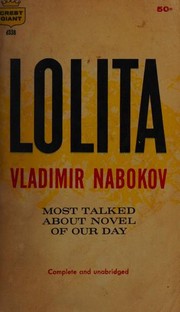
Lolita
by Vladimir Nabokov
The modern companion in the tradition of the unreliable obsessed narrator — Humbert Humbert's first-person account of his own crime is the twentieth-century equivalent of Don José's prison confession: a brilliant, self-serving narrative that constructs its own monstrousness while asking the reader to feel sympathy; both novels are masterpieces of the technique of the self-damning narrator who cannot see himself clearly.
- 8Buy on Amazon
Bizet's Carmen
by Meilhac and Halévy (libretto), Bizet (music)
The opera that transformed Mérimée's novella into one of the most popular works in the repertoire — the 1875 libretto by Meilhac and Halévy simplifies and sentimentalizes Mérimée's ironic story while giving it musical life of extraordinary power; attending or listening to the opera after reading the novella reveals what each medium can and cannot do with the same story.
More Carmen Resources
More Reading Recommendations
View all →Monthly Newsletter
Never miss a big release
Get the most anticipated upcoming books delivered to your inbox once a month — no spam, no filler.
Monthly only. Unsubscribe anytime.
Book links are Amazon affiliate links. As an Amazon Associate, BookReleaseRadar earns from qualifying purchases at no extra cost to you.