Recommendations
Books Like Buddenbrooks
Best books to read after Buddenbrooks by Thomas Mann
Mann's 1901 Nobel Prize-winning chronicle traces four generations of a Lübeck merchant family from commercial height to extinction, arguing that artistic refinement and practical will are incompatible — the more sensitive the Buddenbrooks become, the less able to sustain themselves. These recommendations extend the experience through Mann's other work, through European family-saga novels that share its scope and its study of decline, and through fiction that examines the intersection of culture, commerce, and inherited identity with the same precision.
- 1
 Buy on Amazon
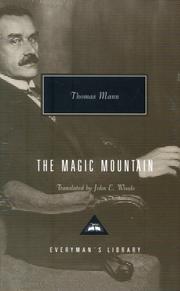
The Magic Mountain
by Thomas Mann
Mann's 1924 novel and the essential companion to Buddenbrooks: Hans Castorp goes to a Swiss sanatorium to visit his cousin and stays for seven years, becoming the vessel for a vast debate about European civilization at the point of its catastrophic breakdown in the First World War. Where Buddenbrooks is a nineteenth-century novel about one family's decline, The Magic Mountain is a twentieth-century novel about an entire civilization's decline — both use a specific microcosm to diagnose a historical condition.
- 2
 Buy on Amazon
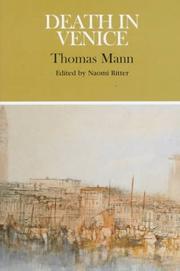
Death in Venice
by Thomas Mann
Mann's 1912 novella — Gustav von Aschenbach, a famous aging writer, goes to Venice and becomes obsessively enchanted by the beautiful boy Tadzio. Death in Venice is the most compressed expression of the themes that run through all of Mann's work: the relationship between artistic sensibility and death, between beauty and corruption, between the Apollonian order and the Dionysian abyss. Hanno Buddenbrook's musical dissolution anticipates Aschenbach's aesthetic dissolution.
- 3
 Buy on Amazon
Effi Briest
by Theodor Fontane
Fontane's 1896 masterpiece — the greatest German realist novel and the most obvious precursor to Buddenbrooks in the German literary tradition. Mann acknowledged Fontane's influence explicitly; the same Hanseatic world of bourgeois rectitude, social code, and its costs is the world of both novels. Where Fontane studies the destruction of an individual woman by social code, Mann studies the destruction of an entire family line by the tension between commerce and art.
- 4Buy on Amazon
Anna Karenina
by Leo Tolstoy
Tolstoy's 1878 masterpiece and the most obvious international companion to Buddenbrooks in scope and moral seriousness. Both novels are organized around the question of what a good life requires and what destroys it; both follow multiple storylines across generations (or multiple stories across a single generation in Anna Karenina's case) and both use the full resources of the realist novel to ask questions about civilization and its costs.
- 5
 Buy on Amazon
The Forsyte Saga
by John Galsworthy
Galsworthy's 1906–1921 trilogy — the Forsyte family, English upper-middle-class proprietors in London across three generations, from the high Victorian era through the Edwardian twilight and into the 1920s. The Forsyte Saga is the closest English equivalent to Buddenbrooks: a multi-generational study of a prosperous family whose values are gradually revealed as inadequate to the world that succeeds them, told with the same combination of social precision and elegiac tenderness.
- 6
 Buy on Amazon
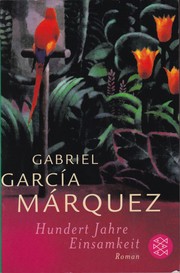
One Hundred Years of Solitude
by Gabriel García Márquez
García Márquez's 1967 masterpiece — the Buendía family across seven generations in the fictional town of Macondo, from its founding to its destruction. One Hundred Years of Solitude and Buddenbrooks are the two great novels of family decline in world literature: where Mann's approach is realistic and psychologically precise, García Márquez's is magical-realist and mythological — but both trace the same inexorable arc from foundation to extinction.
- 7
 Buy on Amazon
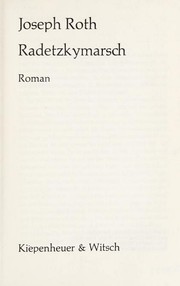
The Radetzky March
by Joseph Roth
Roth's 1932 masterpiece — three generations of the Trotta family in the Austro-Hungarian Empire, from the Battle of Solferino to the First World War. The Radetzky March and Buddenbrooks are companion studies in the decline of a bourgeois dynasty whose sustaining myth (military honor in Roth, commercial prosperity in Mann) gradually becomes unreal — both are elegies for a European world about to be destroyed by historical catastrophe.
- 8Buy on Amazon
The Brothers Karamazov
by Fyodor Dostoevsky
Dostoevsky's 1880 masterpiece — the story of three brothers and the murder of their father, encompassing the greatest theological and psychological arguments in Russian literature. Where Buddenbrooks is a realist study of a family's material decline, The Brothers Karamazov is a psychological and spiritual study of a family's moral crisis — both are novels that use a family as the lens through which to ask the deepest questions about human civilization.
More Buddenbrooks Resources
More Reading Recommendations
View all →Monthly Newsletter
Never miss a big release
Get the most anticipated upcoming books delivered to your inbox once a month — no spam, no filler.
Monthly only. Unsubscribe anytime.
Book links are Amazon affiliate links. As an Amazon Associate, BookReleaseRadar earns from qualifying purchases at no extra cost to you.