Recommendations
Books Like Blink
Best books to read after Blink by Malcolm Gladwell
Blink explores when to trust rapid intuitive judgment and when to distrust it — a question at the heart of decision-making in medicine, finance, policing, and everyday life. These 8 books extend that question into cognitive psychology, behavioral economics, and the broader study of how minds make good and bad decisions.
- 1
 Buy on Amazon
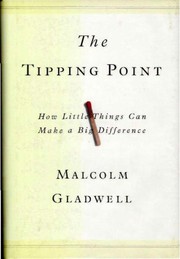
The Tipping Point
by Malcolm Gladwell
Gladwell's 2000 debut examines how social phenomena spread — through connectors, mavens, salespeople, stickiness, and context — and is the natural companion to Blink in Gladwell's examination of the hidden factors that shape behavior below the level of conscious awareness.
- 2
 Buy on Amazon
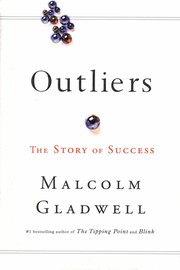
Outliers
by Malcolm Gladwell
Gladwell's 2008 third book examines the factors behind extraordinary success — arguing that the '10,000 hours' of deliberate practice, not natural talent, produces expertise — and is directly in conversation with Blink: what Blink calls thin-slicing is exactly the pattern recognition that Outliers argues is produced by accumulated practice.
- 3
 Buy on Amazon
Thinking, Fast and Slow
by Daniel Kahneman
Kahneman's 2011 synthesis of cognitive psychology research is the most important companion to Blink in the scientific literature: Kahneman's System 1 (fast, automatic, intuitive) is the mechanism that produces Gladwell's thin-slicing, and reading Thinking, Fast and Slow gives the experimental evidence and theoretical framework that Gladwell's anecdote-driven account lacks.
- 4
 Buy on Amazon
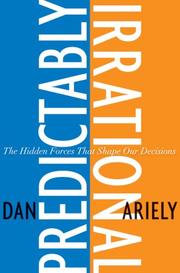
Predictably Irrational
by Dan Ariely
Ariely's 2008 behavioral economics bestseller complements Blink's examination of when rapid judgment fails: Ariely documents the specific ways in which System 1 reasoning produces predictable errors in economic decision-making, extending the analysis from the question of 'when is intuition reliable?' to 'in what specific situations does it systematically mislead us?'
- 5
 Buy on Amazon
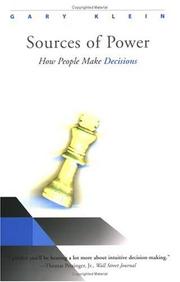
Sources of Power
by Gary Klein
Klein's 1998 account of how experienced professionals — firefighters, military commanders, nurses — make rapid decisions in complex, high-stakes situations is the most important academic precursor to Blink: Gladwell's thin-slicing is Klein's 'recognition-primed decision-making,' and reading Klein alongside Gladwell gives you the empirical research behind the popular account.
- 6
 Buy on Amazon
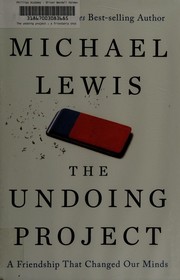
The Undoing Project
by Michael Lewis
Lewis's 2016 account of the Kahneman-Tversky partnership provides the backstory to the research that Blink partly builds on and partly contests: Kahneman and Tversky's research on the systematic failures of expert intuition is the empirical counterargument to Blink's celebration of thin-slicing, and The Undoing Project tells the story of how that research was done.
- 7
 Buy on Amazon
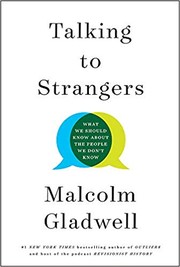
Talking to Strangers
by Malcolm Gladwell
Gladwell's 2019 sixth book is the darkest application of Blink's insights: when we apply the thin-slicing approach (reading emotional states and truthfulness from brief impressions) to strangers rather than professional situations we have extensive practice in, we consistently misread people — with consequences ranging from embarrassment to death.
- 8
 Buy on Amazon
The Power of Habit
by Charles Duhigg
Duhigg's 2012 account of the neuroscience and psychology of habit formation is the most important companion to Blink in the popular science of unconscious behavior: where Blink focuses on rapid judgment, The Power of Habit focuses on automatic behavioral patterns — both books argue that the unconscious mind drives most of what we do, for better and for worse.
More Blink Resources
More Reading Recommendations
View all →Monthly Newsletter
Never miss a big release
Get the most anticipated upcoming books delivered to your inbox once a month — no spam, no filler.
Monthly only. Unsubscribe anytime.
Book links are Amazon affiliate links. As an Amazon Associate, BookReleaseRadar earns from qualifying purchases at no extra cost to you.