Recommendations
Books Like Bel-Ami
Best books to read after Bel-Ami by Maupassant
Guy de Maupassant's most ambitious novel (1885) — Georges Duroy's ruthless ascent from poverty through Third Republic Paris via a series of relationships with well-connected women; a ferocious study in journalistic corruption, colonial politics, and social ambition whose ending (Duroy ascending the Madeleine's steps to his society marriage) is one of the most devastating in French fiction. These recommendations extend the experience through Maupassant's stories, through French Naturalism, and through the tradition of the social-climbing rogue.
- 1
 Buy on Amazon
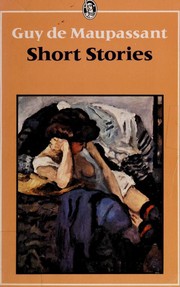
The Complete Short Stories of Guy de Maupassant
by Guy de Maupassant
Maupassant's primary achievement is in the short story, and the complete stories give his fullest range — 'The Necklace', 'Boule de Suif', 'A Piece of String', 'The Horla' are among the finest short stories in any language; Bel-Ami shows what he could do at novel length, but the stories are where his mastery is most concentrated.
- 2
 Buy on Amazon
The Red and the Black
by Stendhal
Stendhal's novel (1830) is the most important predecessor to Bel-Ami — Julien Sorel's social climbing through Restoration France via relationships with women who are more powerful than he is follows exactly the pattern Duroy repeats; the comparison reveals the shift from Stendhal's romantic idealism (Julien has genuine passions that doom him) to Maupassant's Naturalist disillusion (Duroy has no genuine passions and succeeds).
- 3
 Buy on Amazon
Nana
by Émile Zola
Zola's novel is the most direct French Naturalist companion to Bel-Ami — where Duroy uses his sexual attraction to rise through the women who desire him, Nana uses her sexual attraction to destroy the men who desire her; the two novels together define the Naturalist treatment of sexual power in Third Republic France.
- 4
 Buy on Amazon
Lost Illusions
by Honoré de Balzac
Balzac's masterwork is the most important French predecessor to Bel-Ami's newspaper world — Lucien de Rubempré's career in Paris journalism in the 1820s (corruption, financial manipulation, betrayal) is the template that Maupassant updated to the 1880s Third Republic context; the two novels together trace the arc of French literary journalism from Restoration to Republic.
- 5
 Buy on Amazon
Vanity Fair
by William Makepeace Thackeray
Thackeray's English satire is the most important non-French companion to Bel-Ami — Becky Sharp's social climbing through Napoleonic England via male admiration is the English version of what Duroy does in Third Republic France; the comparison reveals both the similarities in how social ambition works in different national contexts and the differences in how Thackeray's satirical irony and Maupassant's naturalist disillusion frame the same pattern.
- 6
 Buy on Amazon
The Great Gatsby
by F. Scott Fitzgerald
Fitzgerald's American novel is the most important twentieth-century companion to Bel-Ami — Jay Gatsby's self-reinvention and his pursuit of Daisy through the wealth he has accumulated is the American Romantic version of what Duroy does in Naturalist Third Republic France; the comparison illuminates how the social-climber novel changes when the dream of social ascent retains its romantic aura vs. when it is analyzed with Naturalist disenchantment.
- 7
 Buy on Amazon
A Sentimental Education
by Gustave Flaubert
Flaubert's semi-autobiographical novel (1869) shares Bel-Ami's French Naturalist social world — Frédéric Moreau's passive pursuit of Madame Arnoux across the revolutionary upheavals of 1848 is the weak-willed complement to Duroy's active ambition; where Duroy is successful precisely because he has no ideals, Frédéric fails because he has one ideal and pursues it too passively.
- 8
 Buy on Amazon
American Psycho
by Bret Easton Ellis
Ellis's American satirical novel (1991) is the most extreme late-twentieth-century version of the Bel-Ami pattern — Patrick Bateman's performance of yuppie social identity and his interior violence are the Reagan-era American version of Duroy's amoral social climbing; where Maupassant's satire is controlled and precise, Ellis's is deliberately excessive, but both novels ask what it costs to have no moral center in a society that rewards social performance.
More Bel-Ami Resources
More Reading Recommendations
View all →Monthly Newsletter
Never miss a big release
Get the most anticipated upcoming books delivered to your inbox once a month — no spam, no filler.
Monthly only. Unsubscribe anytime.
Book links are Amazon affiliate links. As an Amazon Associate, BookReleaseRadar earns from qualifying purchases at no extra cost to you.