Recommendations
Books Like Aurélia
Best books to read after Aurélia by Nerval
Nerval's Aurélia (1855) is the hallucinatory autobiography of his two episodes of madness — one of the most extraordinary documents of the inner life in French literature, treating hallucinations with the precision of a naturalist from a position of partial self-awareness. Published posthumously after his suicide, it was identified by André Breton as a founding document of Surrealism and influenced Artaud, Rimbaud, and the entire French tradition of literature as descent into the unconscious.
- 1
 Buy on Amazon
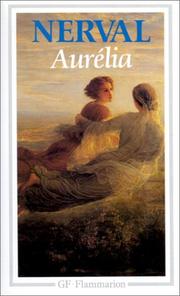
Sylvie
by Gérard de Nerval
The essential companion prose work — where Aurélia treats the impossible ideal through the hallucinatory autobiography of madness, Sylvie treats the same material through lyrical memory, and the two together define the full range of Nerval's prose achievement.
- 2
 Buy on Amazon
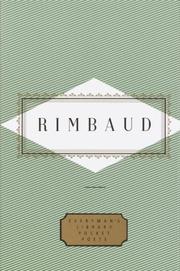
Les Chimères
by Gérard de Nerval
The companion poetry — the same symbolic world as Aurélia (the ideal woman, the Orphic descent, the mythological transformations) in the compressed form of twelve sonnets, and the essential companion for understanding the full scope of Nerval's vision.
- 3
 Buy on Amazon
Une Saison en enfer
by Arthur Rimbaud
Rimbaud's 1873 prose poem of spiritual crisis and its aftermath is the most direct successor to Aurélia in the French tradition — the same hallucinatory precision, the same sense of the visionary experience as simultaneously real and catastrophic, and the same formal ambition to render an inner life that exceeds the conventions of narrative prose.
- 4
 Buy on Amazon
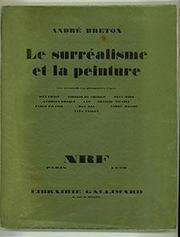
Le Surréalisme et la peinture
by André Breton
Breton explicitly identified Aurélia as a founding document of Surrealism, and his writings on automatic writing, the unconscious, and the relationship between madness and artistic vision are the most important twentieth-century theoretical engagement with what Nerval accomplished in Aurélia.
- 5
 Buy on Amazon
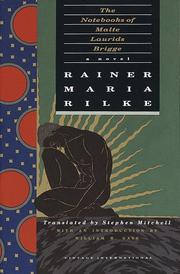
Malte Laurids Brigge
by Rainer Maria Rilke
Rilke's only novel — the notebook of a young Danish poet who lives alone in Paris and begins to encounter visions and hallucinations — is the most important European modernist parallel to Aurélia's project of rendering the experience of dissolution in the first person.
- 6
 Buy on Amazon
The Bell Jar
by Sylvia Plath
Plath's novel of a young woman's mental breakdown is the most widely read twentieth-century successor in the tradition of the first-person account of madness that Aurélia inaugurates — the comparison shows the tradition's continuity and its transformation from mystical experience to psychiatric record.
- 7
 Buy on Amazon
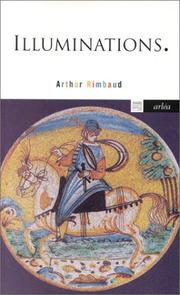
Illuminations
by Arthur Rimbaud
Rimbaud's prose poems are the most radical transformation of the Nervalian hallucinatory method — where Aurélia's hallucinations are embedded in autobiographical narrative, Rimbaud's Illuminations dissolve narrative altogether and present the hallucinatory vision directly.
- 8
 Buy on Amazon
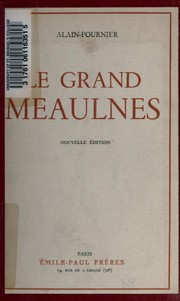
Le Grand Meaulnes
by Alain-Fournier
Alain-Fournier's novel inherits the Nervalian structure of the enchanted world that cannot be returned to — where Aurélia's narrator cannot return to the world before madness, Meaulnes cannot return to the enchanted estate, and the comparison shows the lyrical tradition descending from Nerval.
More Aurélia Resources
More Reading Recommendations
View all →Monthly Newsletter
Never miss a big release
Get the most anticipated upcoming books delivered to your inbox once a month — no spam, no filler.
Monthly only. Unsubscribe anytime.
Book links are Amazon affiliate links. As an Amazon Associate, BookReleaseRadar earns from qualifying purchases at no extra cost to you.