Recommendations
Books Like Antifragile
Best books to read after Antifragile by Nassim Nicholas Taleb
Antifragile proposes a constructive philosophy for living in a world of uncertainty: don't try to predict or prevent volatility, build systems that benefit from it. These 8 books extend that philosophy into risk management, evolutionary biology, organizational design, and the history of fragile institutions.
- 1
 Buy on Amazon
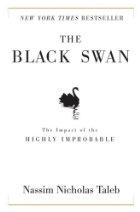
The Black Swan
by Nassim Nicholas Taleb
The second book of the Incerto series makes the negative case that Antifragile responds to: that the most important events are inherently unpredictable, that our models systematically fail to account for them, and that the modern world is more fragile than it appears precisely because it tries to eliminate the small stresses that would prepare it for large ones.
- 2
 Buy on Amazon
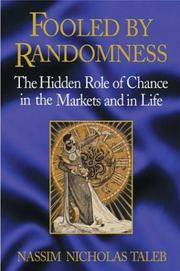
Fooled by Randomness
by Nassim Nicholas Taleb
The first book of the Incerto series, on the role of chance in financial markets and in life — the foundational statement of Taleb's argument that human beings systematically underestimate randomness and mistake luck for skill, which is the epistemic error that Antifragile's philosophy is designed to address.
- 3
 Buy on Amazon
Skin in the Game
by Nassim Nicholas Taleb
The fourth and most recent Incerto volume argues that those who bear the consequences of their predictions and recommendations are more reliable than those who don't — that 'skin in the game' is a necessary condition for wisdom in conditions of uncertainty, and the ethical dimension of the philosophy Antifragile develops.
- 4
 Buy on Amazon
Thinking, Fast and Slow
by Daniel Kahneman
Kahneman's 2011 synthesis of cognitive psychology research provides the psychological foundation for understanding why the fragilities that Antifragile documents persist: the planning fallacy, overconfidence, and the narrative fallacy are all System 1 errors that make human beings consistently underestimate their own fragility.
- 5
 Buy on Amazon
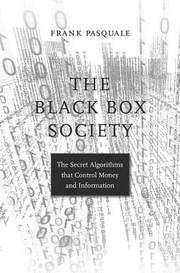
The Black Box Society
by Frank Pasquale
For readers interested in the institutional fragility that Antifragile critiques — the fragility produced by concentrated, opaque systems that eliminate the variability and feedback loops that would allow them to adapt — Frank Pasquale's 2015 account of algorithmic systems in finance, search, and reputation shows specific cases where the pursuit of efficiency has produced exactly the kind of hidden fragility Taleb warns against.
- 6
 Buy on Amazon
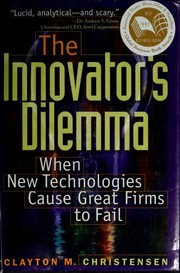
The Innovator's Dilemma
by Clayton M. Christensen
Christensen's 1997 account of how successful companies fail to adapt to disruptive innovation is one of the great business illustrations of institutional fragility: organizations optimize for their current environment in ways that make them brittle when the environment changes, exactly the failure mode that Antifragile is designed to diagnose.
- 7
 Buy on Amazon
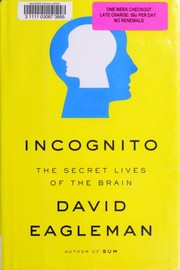
Incognito
by David Eagleman
Eagleman's 2011 account of the unconscious processes that drive most human behavior provides the neuroscience perspective on Taleb's argument that explicit models fail where implicit, adaptive systems succeed: the human brain's unconscious processes are antifragile in ways that conscious deliberation is not.
- 8
 Buy on Amazon
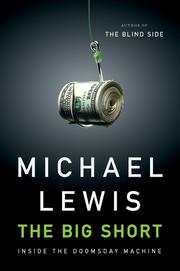
The Big Short
by Michael Lewis
Lewis's 2010 account of the 2008 financial crisis is one of the great narrative illustrations of Antifragile's thesis: the housing market was fragile (optimized for the expected scenario of continuously rising prices) in ways that the system's designers did not recognize, and the people who recognized and bet on that fragility profited from its collapse.
More Antifragile Resources
More Reading Recommendations
View all →Monthly Newsletter
Never miss a big release
Get the most anticipated upcoming books delivered to your inbox once a month — no spam, no filler.
Monthly only. Unsubscribe anytime.
Book links are Amazon affiliate links. As an Amazon Associate, BookReleaseRadar earns from qualifying purchases at no extra cost to you.