Recommendations
Books Like Anna Karenina
Best books to read after Anna Karenina by Leo Tolstoy
Tolstoy's 1878 masterpiece follows two parallel stories: Anna Karenina's adulterous love affair with Count Vronsky and her progressive social destruction, and Konstantin Levin's search for the meaning of a good life. These recommendations extend the experience through Tolstoy's other work, through the great nineteenth-century European novels of adultery and social destruction, and through fiction that shares Anna Karenina's combination of moral seriousness, narrative scale, and depth of feeling for its characters.
- 1
 Buy on Amazon
War and Peace
by Leo Tolstoy
Tolstoy's 1869 masterpiece — the natural companion to Anna Karenina, the other great pillar of the Tolstoy canon. Where Anna Karenina is intimate (two parallel stories of love and marriage) and set in the 1870s urban world Tolstoy knew, War and Peace is vast (four aristocratic families across the Napoleonic Wars) and set in a heroic past. Both are essential Tolstoy; together they give the full range of his imagination.
- 2
 Buy on Amazon
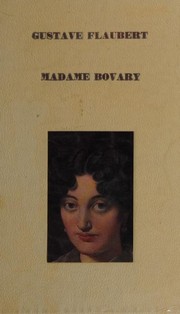
Madame Bovary
by Gustave Flaubert
The French companion to Anna Karenina and the novel most directly compared to it: Emma Bovary and Anna Karenina are the two great adulterous heroines of nineteenth-century European fiction, both destroyed by the gap between their romantic imagination and the reality of their marriages. Where Tolstoy distributes his sympathy and his moral inquiry across multiple storylines, Flaubert stays inside Emma's consciousness with cold precision — but both novels refuse to moralize about women who want more than their world offers.
- 3
 Buy on Amazon
Effi Briest
by Theodor Fontane
The German Anna Karenina (1896) — Effi Briest, a young woman married to a much older Prussian official, has a brief affair that is discovered years later with devastating social consequences. Where Tolstoy dramatizes the destruction of a great passion, Fontane is interested in the destruction of something more minor — a girlish flirtation long outgrown — by a social code that cannot distinguish between the two. Fontane's tone is more melancholy and precise, Tolstoy's more morally vast, but both are studying the same mechanism.
- 4
 Buy on Amazon
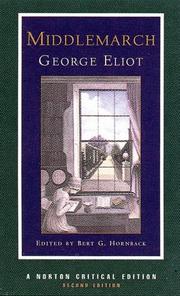
Middlemarch
by George Eliot
The English Victorian companion in scale and moral seriousness: George Eliot's 1871 study of four interconnected lives in the provincial town of Middlemarch, centering on Dorothea Brooke's disastrous first marriage and Lydgate's gradual compromise of his ideals. Both Anna Karenina and Middlemarch are novels that take the full measure of what it costs to live in a society that values convention over individual conscience.
- 5Buy on Amazon
Doctor Zhivago
by Boris Pasternak
The twentieth-century Russian companion to Anna Karenina: Yuri Zhivago, a physician and poet, is torn between his wife Tonya and his passionate love for Lara Antipova against the backdrop of the Russian Revolution and Civil War. Where Tolstoy studies the destruction of love by social convention in the 1870s, Pasternak studies the destruction of love by historical catastrophe in the 1910s–1920s — but both novels are elegies for the private world that public forces destroy.
- 6
 Buy on Amazon
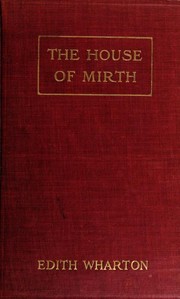
The House of Mirth
by Edith Wharton
The American companion in the tradition of the novel about a woman destroyed by the gap between her social world's demands and her own nature: Lily Bart, beautiful and intelligent, cannot bring herself to perform the hypocrisies that Old New York requires for survival. Where Anna Karenina is destroyed by a passion she cannot contain, Lily Bart is destroyed by an honesty she cannot abandon — but both novels are devastating about what happens to women who are too real for their worlds.
- 7Buy on Amazon
The Brothers Karamazov
by Fyodor Dostoevsky
The companion Russian masterpiece, published two years after Anna Karenina (1880): the story of the Karamazov brothers and the murder of their father, which Dostoevsky made the occasion for the most comprehensive investigation of faith, doubt, suffering, and freedom in Russian fiction. Where Tolstoy's greatest strength is his embodied, physical rendering of character and feeling, Dostoevsky's is his theological and philosophical intensity — together they define the poles of the Russian novel.
- 8
 Buy on Amazon
The Age of Innocence
by Edith Wharton
Wharton's 1920 companion in the tradition of the novel about a love that social convention prevents: Newland Archer falls in love with the unconventional Ellen Olenska while engaged to her cousin May Welland, and cannot bring himself to choose Ellen over the social world that formed him. Where Anna Karenina makes the transgressive choice and is destroyed by the consequences, Newland Archer never makes the choice at all — and Wharton is interested in that capitulation as its own kind of tragedy.
More Anna Karenina Resources
More Reading Recommendations
View all →Monthly Newsletter
Never miss a big release
Get the most anticipated upcoming books delivered to your inbox once a month — no spam, no filler.
Monthly only. Unsubscribe anytime.
Book links are Amazon affiliate links. As an Amazon Associate, BookReleaseRadar earns from qualifying purchases at no extra cost to you.