Recommendations
Books Like A Passage to India
Best books to read after A Passage to India by E.M. Forster
Forster's 1924 masterpiece — Dr. Aziz's friendship with newly arrived Englishwomen, the fateful Marabar Caves excursion, and the trial that exposes the impossibility of genuine connection under colonialism. These recommendations extend the experience through Forster's other novels, through fiction that shares its investigation of cross-cultural encounter and colonial power, and through novels that engage with the British Empire's moral failure with equal honesty.
- 1Buy on Amazon
Howards End
by E.M. Forster
Forster's 1910 novel — the meeting of the Schlegel sisters (cultured, liberal, idealistic) and the Wilcox family (practical, imperial, conventional) around the question of who will inherit the English house Howards End. Howards End and A Passage to India are Forster's two greatest novels — where Howards End asks whether personal connection can bridge class and temperament within England, A Passage to India asks the same question about the gap between colonizer and colonized, and finds a darker answer.
- 2Buy on Amazon
A Room with a View
by E.M. Forster
Forster's 1908 novel — Lucy Honeychurch's liberation in Florence from the restraints of Edwardian English convention, through her love for George Emerson. A Room with a View is Forster's most optimistic novel about the possibility of human connection across social division, and reading it alongside A Passage to India shows how far Forster's sense of what is possible darkened between 1908 and 1924: the liberation that Florence permits to Lucy is simply not available to Aziz and Fielding in Chandrapore.
- 3
 Buy on Amazon
Things Fall Apart
by Chinua Achebe
Achebe's 1958 masterpiece — the essential companion to A Passage to India for understanding colonialism from the colonized perspective. Where Forster writes about British India from the outside (as a liberal Englishman who sees the injustice of the colonial relationship), Achebe writes about colonial Nigeria from the inside. Reading both gives the fullest picture of what colonial power did: what it looked like to the colonizer who could see its injustice, and what it destroyed from the colonized world's perspective.
- 4
 Buy on Amazon
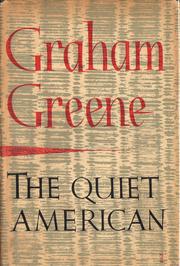
The Quiet American
by Graham Greene
Greene's 1955 novel about British journalist Thomas Fowler in Vietnam during the French colonial war, watching a naive young American operative cause destruction through idealistic incomprehension. The Quiet American is the mid-century companion to A Passage to India in the English liberal tradition of fiction about Western power's effects on Asian societies — both novels are written by Englishmen who see the damage their civilization is doing and are morally honest about it.
- 5
 Buy on Amazon
Heart of Darkness
by Joseph Conrad
Conrad's 1899 novella — Marlow's journey up the Congo to find Kurtz — is the companion and the counterpoint: where Forster's novel shows British colonialism in India through the experience of genuine human relationships across the colonial divide (however impossible those relationships prove), Conrad's shows Belgian colonialism in the Congo as a landscape of pure extraction and horror with no human relationships at all. Both are devastating about Western civilization's moral failure in its colonies.
- 6
 Buy on Amazon
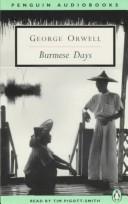
Burmese Days
by George Orwell
Orwell's 1934 novel — John Flory, a timber merchant in British Burma, and his alienation from both the British colonial community (whose racism and hypocrisy he despises) and the Burmese world (which he can admire but not fully enter). Burmese Days is the bleakest English novel about colonial life — where Forster's Fielding maintains his decency and his friendship with Aziz across the colonial divide, Orwell's Flory is destroyed by the impossibility of maintaining that position.
- 7
 Buy on Amazon
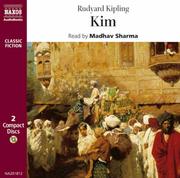
Kim
by Rudyard Kipling
Kipling's 1901 novel — the story of Kimball O'Hara, an Irish orphan raised in India who becomes an agent in the Great Game between Britain and Russia. Kim is the most ambivalent of the great English India novels: Kipling loves India and renders it with genuine warmth and specificity, but does not question the Empire that governs it. Reading Kim alongside A Passage to India is reading the colonial novel that takes the Empire for granted alongside the one that exposes its injustice.
- 8
 Buy on Amazon
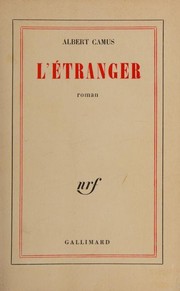
The Stranger
by Albert Camus
Camus's 1942 Algeria — Meursault's murder of an Arab and his subsequent trial — is the French colonial companion to A Passage to India: another novel set in a colonized North African or South Asian country in which the colonial system's fundamental injustice is revealed through a trial. Both novels use a courtroom to expose how colonial justice works — how it pretends to be about the crime when it is actually about social and racial order.
More A Passage to India Resources
More Reading Recommendations
View all →Monthly Newsletter
Never miss a big release
Get the most anticipated upcoming books delivered to your inbox once a month — no spam, no filler.
Monthly only. Unsubscribe anytime.
Book links are Amazon affiliate links. As an Amazon Associate, BookReleaseRadar earns from qualifying purchases at no extra cost to you.