Recommendations
Books Like A Doll's House
Best books to read after A Doll's House by Henrik Ibsen
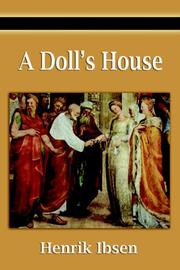
Ibsen's 1879 founding document of modern drama — Nora Helmer's recognition that she has been a doll in her husband's house, and the door slam that scandalized nineteenth-century Europe — established the template for social problem drama and for the serious treatment of women's lives on stage. These recommendations extend the experience through Ibsen's other major plays, through the European theatrical tradition, and through fiction and drama that investigates women's autonomy and self-determination across different periods and cultures.
- 1
 Buy on Amazon
Hedda Gabler
by Henrik Ibsen
The essential companion — the darker counterpart to Nora's act of self-liberation. Where Nora slams the door and leaves, Hedda shoots herself; A Doll's House ends with an act of liberation and Hedda Gabler ends with an act of destruction that is also, in its way, the only liberation available to Hedda. Reading the two plays together shows the full range of Ibsen's thinking about women and the social world.
- 2
 Buy on Amazon
Ghosts
by Henrik Ibsen
The immediate sequel in Ibsen's development — Mrs. Alving's catastrophic day of recognition about the cost of staying. Ibsen wrote Ghosts as a response to the controversy around A Doll's House: Mrs. Alving is the wife who did not leave, who stayed and 'did her duty' for twenty-six years, and Ghosts shows what that duty costs. The two plays must be read together as Ibsen's two possible outcomes of the same situation.
- 3Buy on Amazon
The Wild Duck
by Henrik Ibsen
The play in which Ibsen interrogates his own idealism — asking what happens when the demand for truth (which A Doll's House endorses) is applied not to exceptional people but to ordinary ones. The Wild Duck is a darker and more self-critical play than A Doll's House, and reading them together shows how Ibsen's thinking about truth, freedom, and their consequences developed across his career.
- 4
 Buy on Amazon
The Awakening
by Kate Chopin
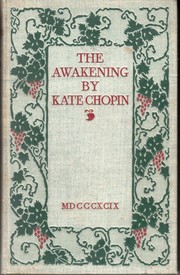
The American companion — Edna Pontellier's gradual awakening to her own desires and to the impossibility of living them. Published in 1899, twenty years after A Doll's House, The Awakening explores the same territory from an American perspective: the woman who cannot conform to what marriage and motherhood require, who discovers herself too late to save herself by any means other than the one Edna finally chooses.
- 5
 Buy on Amazon
The Yellow Wallpaper
by Charlotte Perkins Gilman
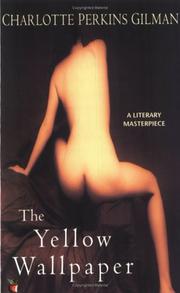
The American contemporary companion — the narrator's gradual descent into madness under the 'rest cure' imposed by her physician husband. The Yellow Wallpaper (1892) and A Doll's House (1879) are companion feminist texts of the same decade: where A Doll's House shows the wife who recognizes her imprisonment and escapes, The Yellow Wallpaper shows what happens when the imprisonment is so complete that escape takes the form of madness.
- 6
 Buy on Amazon
Pygmalion
by George Bernard Shaw
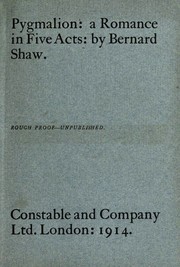
Shaw's comic companion — Higgins's transformation of Eliza Doolittle and its unexpected consequences. Shaw was Ibsen's most important British disciple and Pygmalion is his most Ibsenite social problem play, exploring the same questions as A Doll's House (what does a woman owe to the man who has formed her? what is she when she is no longer that role?) in a comic key.
- 7
 Buy on Amazon
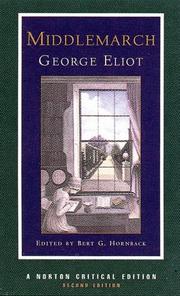
Middlemarch
by George Eliot
Eliot's 1871 novel companion in the tradition of the great work about female ambition and its social constraints — Dorothea Brooke's exceptional gifts with no adequate outlet, her two marriages, and the famous finale about 'unhistoric acts' that make the world better. Middlemarch and A Doll's House are companion investigations of the same problem from different angles: Eliot's shows the woman who cannot escape (Dorothea adjusts), Ibsen's shows the woman who does.
- 8
 Buy on Amazon
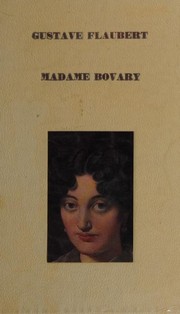
Madame Bovary
by Gustave Flaubert
Flaubert's 1857 companion and the most important literary precursor to Ibsen's social problem plays about women — Emma Bovary's romantic fantasies and her destruction within the constraints of her provincial marriage. A Doll's House and Madame Bovary are the two great nineteenth-century works about the woman who cannot conform to the world that has formed her, and Ibsen certainly knew Flaubert's novel.
More A Doll's House Resources
More Reading Recommendations
View all →Monthly Newsletter
Never miss a big release
Get the most anticipated upcoming books delivered to your inbox once a month — no spam, no filler.
Monthly only. Unsubscribe anytime.
Book links are Amazon affiliate links. As an Amazon Associate, BookReleaseRadar earns from qualifying purchases at no extra cost to you.